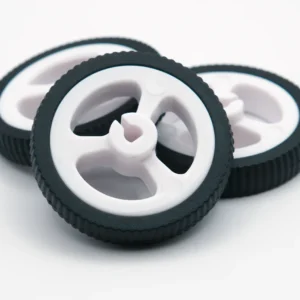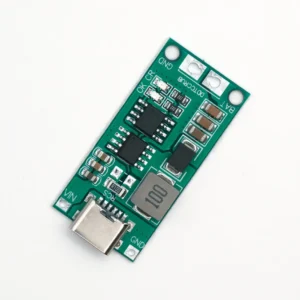
Getting into combat robotics can get expensive pretty quickly.
Even the smallest robots need motors, electronics, a radio, batteries, charger, a chassis and, of course, something to hit the other robot with. If you are just curious about the hobby, spending a few hundred euros on your first robot isn’t exactly an easy sell.
A few years ago, we wanted to try something different.
What if we could make a small combat robot that people could build themselves during a workshop, without needing to spend much money?
That’s how this project started.
It started in 2023
The first version was made for a workshop at Makerspace.lt in 2023.
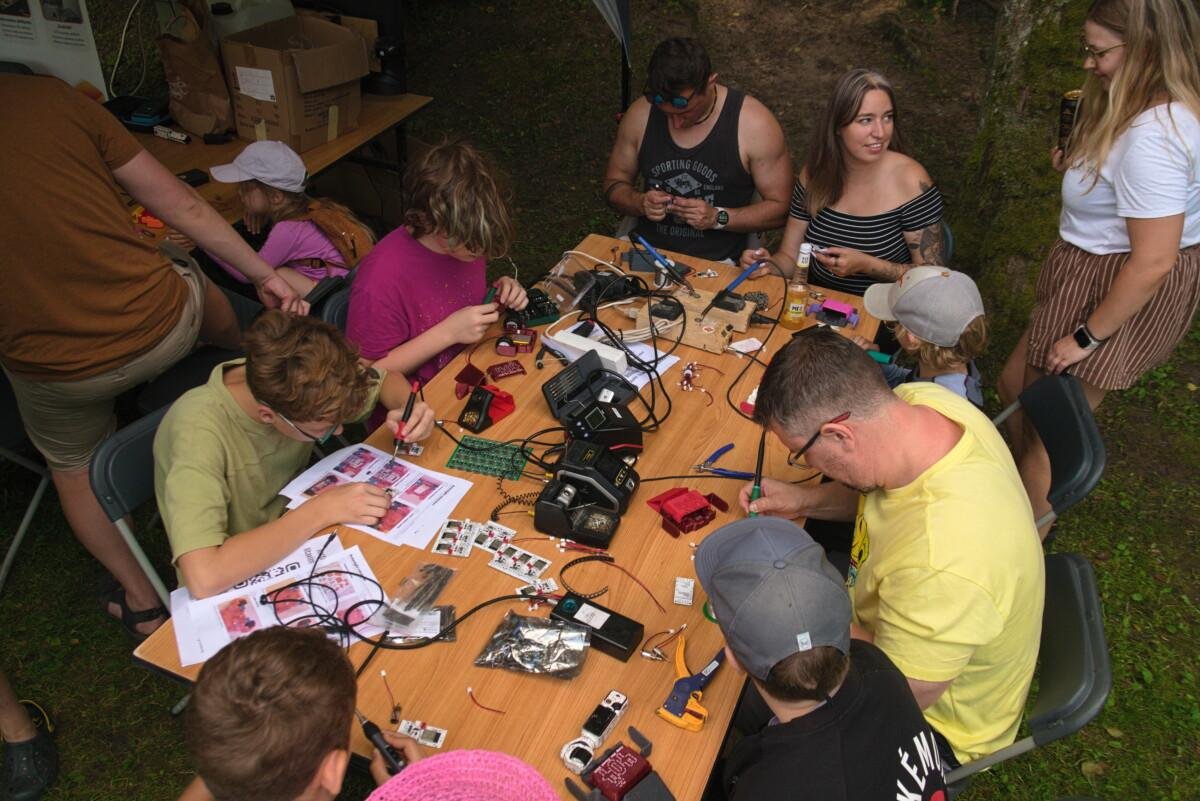
The idea was quite simple. Give people the parts, teach them the basics of soldering and assembly, and by the end of the workshop everyone would have a small robot they could actually drive around.
And then, obviously, fight with.
It was more of an experiment than a serious attempt to design a competitive combat robot. We wanted something cheap, simple and reasonably hard to mess up during a workshop.
It turned out to be a pretty good combination.
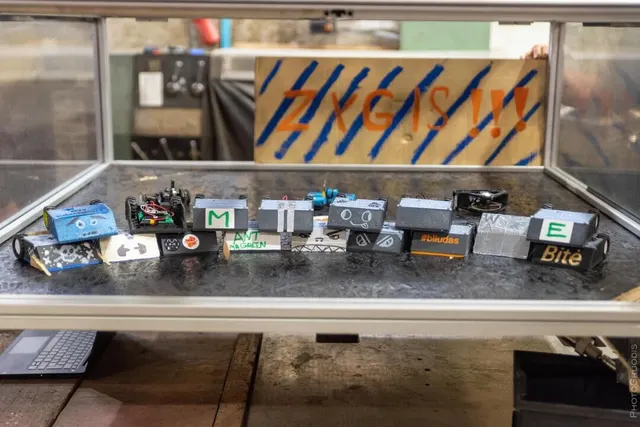
2023 – Makerspace.lt
Since then, we’ve kept doing the workshop and changing the robot a little bit each time. Some changes were planned, some came from watching a bunch of people building them and having the same problems like having a hard time screwing M3 metal screws into plastic.
That’s probably one of the best ways to develop something like this.
Build a lot of them, give them to people who have never used one before, and see what breaks.
Every year it got a little better
The robot has gone through several versions since the first workshop.
We’ve changed the electronics, the 3D printed parts, the way everything is assembled and generally tried to make the whole thing easier to build.
In 2024, we ran the workshop again, and later the project also made its way to No Trolls Allowed camp.
2024 edition in our Makerspace
Having the robot at different events was useful because the people building them were different every time. Someone who has never soldered before will find completely different problems from someone who has already built a few robots.
It also gave us a pretty good excuse to keep making changes.
So, why an Antweight?
Antweight is a nice size for a first combat robot.
The robots are small, the motors are cheap, 3D printing works well for the chassis, and you don’t need a huge arena to make a fight interesting.
More importantly, you get to actually build everything yourself.
You have to solder the motors. You have to put together the electronics. You have to figure out why the robot isn’t moving when you accidentally plugged something in backwards.
And then you get to drive it into a wall.
That’s a much more memorable introduction to electronics and robotics than following a tutorial where the finished project just blinks an LED.
Keeping it under €25
One of the main goals has always been the price.
The current version can be built for less than €25.
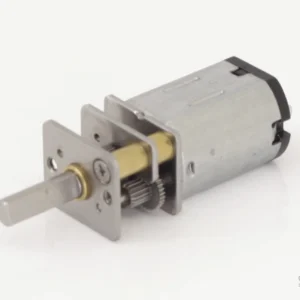
That’s obviously achieved by making quite a few compromises. We’re using inexpensive N20 gear motors, a simple 3D printed chassis and custom electronics designed specifically for the workshop.
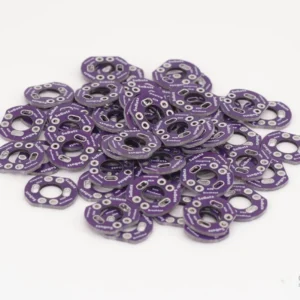
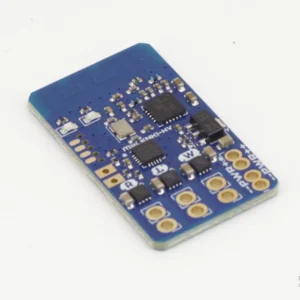
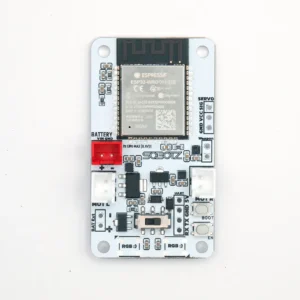
The 2026 version now uses an ESP32-based controller board which is prebuilt by JLCPCB, but of course you can solder it yourself if you know how to solder SMD. It controls the two drive motors and also has an extra motor output that can be used for a simple weapon.
There is also battery monitoring, a servo output and addressable LEDs, although the current version has a problem, that the servo uses the LDO output which isn’t powerful enough for almost any servo. This will have to be updated later.

The complete 2026 design is available on GitHub, including the electronics and 3D printed parts.
We’ve also put together a step-by-step build guide if you want to build one yourself.
Don’t expect to win competitions
There is a fairly important disclaimer here:
This isn’t a particularly good combat robot.
And that’s completely intentional.
If you put it against a properly built competitive Antweight, the €25 robot probably isn’t going to have a great time.
The motors aren’t amazing, there isn’t a powerful brushless weapon, and the chassis isn’t made from some exotic material nor the chasis was made to be very competitive. Pretty much every part of the robot is a compromise between price, simplicity and performance.
But that’s okay.
The purpose of this robot isn’t to win competitions. It’s to get someone interested enough to build their own robot.
Once you’ve built one, you start noticing all the things you’d change.
“These wheels have no grip.”
“I need a better weapon.”
“I need better control system”
And before you know it, you’re looking at better motors, designing your own PCB and wondering whether you really need another robot.
That’s how you get into the hobby.
The workshop is really the point
Over the years, the robot itself has almost become secondary.
The interesting part is watching someone go from having never soldered before to driving something they built themselves around an arena.
Sometimes everything works on the first try.
Usually it doesn’t.
Someone has a motor connected backwards. Someone forgot to solder something. Someone manages to crash the robot before even getting it into the arena.
That’s part of it.
The robot is simple enough that these problems can usually be fixed, and complicated enough that there is something to learn from them.

A big part of making this possible has been Makerspace.lt.
The project started there in 2023, and Makerspace has been a major contributor to the workshops and the development of the robot since then. Having access to the workshop, tools and, most importantly, people willing to build and test things has made it possible to keep improving the design every year.
The No Trolls Allowed workshops were another great opportunity to take the project outside the usual makerspace environment and let even more people build and fight with them.
The latest version of the project, including the 3D files and electronics, is available on GitHub.
[GitHub – Antweight Workshop 2026]
And if you want to build one yourself, we’ve written a complete [Antweight Robot Build Guide] with the assembly instructions.
Maybe it won’t win your first competition.
But for less than €25, it’s a pretty good way to find out if you like building combat robots.